 Loading... Please wait...
- Home
- SEEDS
- SEED MIXES
- BUY PLANTS
- Info Request
-
Educational Videos
- Greenhouse Transplanting Demonstration
- Native Seed Cleaning demonstration at Ion Exchange Native Seed and Plant Nursery
- Attracting Butterflies
- Bidens - Bidens cernua Harvest Video
- Big Blue Stem Harvest
- Butterfly Milkweed Video
- Button Blazingstar - Liatris aspera Video
- Buttonbush - Cephalanthus occidentalis Video
- Canada Anemone - Anemone canadensis Harvest Video
- Cardinal Flower - Lobelia cardinalis Video
- Control Burn - Wildflower Field
- Cream Gentian - Gentiana flavida
- Culver's Root - Veronicastrum virginicum Video
- Cup Plant - Silphium perfoliatum Video
- Dormant Seeding | Planting
- Earthyman's Favorite Wildflowers Video
- Eco-Friendly Golf Course Seed Mix
- Floating Islands
- Fringed Loosestrife - Lysimachia ciliata Video
- Giant Yellow Hyssop - Agastache nepetoides Video
- Indiangrass - Sorghastrum nutans Video
- Iowa Prairie Partner Program
- Leadplant - Amorpha canescens (Potted) Video
- Meadow Blazingstar - Liatris ligulistylis
- Midland Shooting Stars - Dodecatheon meadii Video
- Native Plant Nursery Field Irrigation Experiment
- Nodding Onion - Allium cernuum Video
- Ohio spiderwort - Tradescantia ohiensis Video
- Old Man's Beard - Clematis virginiana blooms Video
- Oxeye Sunflower - Heliopsis helianthoides Video
- Prairie Spiderwort - Tradescantia bracteata
- Purple Coneflower - Echinacea purpurea Video
- Rain Garden or Water Garden Video
- Rattlesnake Master - Eryngium yuccifolium Video
- Riverbank Stabilization - Wetland Plants
- Rose Mallow - Hibiscus militaris Video
- Rosinweed - Silphium integrifolium Video
- Royal Catchfly - Silene regia
- Showy Tick Trefoil - Desmodium canadense Video
- Sneezeweed - Helenium autumnale Video
- Swamp Betony - Pedicularis lanceolata Video
- Swamp Milkweed - Asclepias incarnata Video
- Sweet Blackeyed Susan - Rudbeckia subtomentosa Video
- Tall Coreopsis - Coreopsis tripteris Video
- Urban Butterfly Garden
- Wild Bergamot - Monarda fistulosa Video
- Wild Geranium - Geranium maculatum Harvest
- Wild Goldenglow - Rudbeckia lanciniata Video
- Wild Petunia - Ruellia humilis Harvest Video
- Woodland Knotweed - Polygonum virginianum Video
- Yellow Coneflower - Ratibida pinnata Video
- Blog
- Resources
- Policies
Contact Us
Phone:
563-419-0837
or 563-535-7231
Email:
hbright@ionXchange.com
Browse Products
Add to Wish List
You Recently Viewed...
 New Products


Our Newsletter


)
Product Description
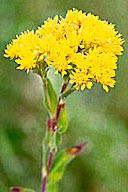
Stiff Goldenrod, Rigid Goldenrod, Hard-leaved Goldenrod
Solidago comes from the Latin word solido meaning "to strengthen; to make solid". Rigida is the Latin word for "stiff; unyielding".

| Sun Exposure | Prairie, Savanna |
| Soil Moisture | Wet Mesic, Mesic, Dry Mesic, Dry |
| Bloom Time |
Summer, Fall August, September, October |
| Bloom Color | Yellow |
| Max Height | 4 feet |
| Wetland Code | FACU- |
| Germ Code | C(60) |
| Seeds Per Ounce | 41,000 |
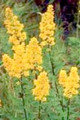
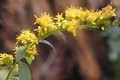
Very common in the eastern Us and the eastern portion of the Tallgrass biome on dry prairies, dry open woods, along roadsides and in disturbed areas. Yellow to yellow-orange flowers appear at the top of the plant in slightly rounded, dense clusters that can be several inches across; blooms from August to October. Leaves are alternate on the stem and are sparsely toothed and leathery.
Goldenrods spread by both seeds and rhizomes. When grown in prairies, savannas and meadows, Goldenrod is not invasive in a sunny, mesic/dry location and is amazingly hardy.
Goldenrod is a host plant for a number of beneficial insects and is used as a food source by a number of moth and butterfly caterpillars. Goldenrod will often be covered with bees, wasps, flies and butterflies sipping nectar when it is in bloom. Other insects including Praying Mantis, Lacewings, spiders, beetles and parasitic wasps utilize it for both habitat and food.
Goldenrod is a late season pollinator, thus provides nectar for many beneficial insects in late summer when other plants are dormant. it's pollinated primarily by insects.
Although considered a weed by some, Goldenrod has earned a reputation as a prized garden plant by gardeners worldwide providing swaths of gold color covered with buzzing insects. When including Goldenrods to your garden, avoid supplementing with additional water.
Historically Goldenrods were unjustly believed to be the cause of hay fever, however, Ragweed (Ambrosia, sp.) is the true hay fever culprit which blooms at the same time as Goldenrod. Ragweed’s pollen is wind-born; Goldenrod's pollen is too heavy and sticky to be blown in the wind.
A lotion was made years ago from Stiff Goldenrod for treating bee stings. Prior to that, early settlers made a thick tea from the leaves to treat swollen throats.
This species is invasive that increases in grazed pastures because it is only eaten in its early stages of growth.
Edible Uses: Unknown
Medicinal Uses: The leaves and blossoms are antiseptic, astringent and styptic. A valuable remedy in the treatment of all kinds of haemorrhages. The flowers have been ground into a lotion and used to treat bee stings. An oil obtained from the plant (is this an essential oil?) is diuretic. The root is cathartic and diuretic. A decoction of the root has been used as an enema. An infusion has been used to restore the flow of urine.
Other Uses: A good quality rubber can be made from a latex that is obtained from the leaves. Mustard, orange and brown dyes can be obtained from the whole plant.
Herbal Uses: Unknown
Related Products

SHOPPINGWholesale Gift Certificates Seeding Chart FAQs |
ORDER INFOMy Account Shipping Returns |
CONTACT USPhone: 563-419-0837 or 563-535-7231 hbright@ionXchange.com Quick Contact Form |
|



